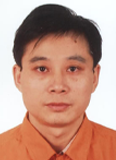
| Prof. Daoxin YaoSun Yat-sen University, China Daoxin Yao, Professor at Sun Yat-sen University and Secretary-General of the Guangdong Physical Society, has published over 180 papers in top physics journals including *Nature*, *Physical Review Letters*, and *NPJ Quantum Materials*, with several cover articles. He contributed a chapter on “Magnetic Frustration Systems” to a Science Press monograph. His recent key work includes proposing multi-orbital models for bilayer nickelate superconductors to study their electronic structures and doping effects; discovering perfect Fermi surface nesting and spin-fluctuation-induced high-temperature superconductivity in 2D lattices; first proposing the Einstein–de Haas effect of topological magnons; constructing magnetic models for iron-based superconductors and revealing quantum double-peak RIXS features; developing a semiclassical theory for surface Fermi arcs in Weyl semimetals; using quantum Monte Carlo methods to identify novel quantum spin phases confirmed by neutron scattering; and exactly solving classical and quantum models on frustrated lattices to reveal zero-temperature entropy and topological states like loop gases and spin liquids. His work is widely recognized in top journals and monographs edited by Nobel laureates. |
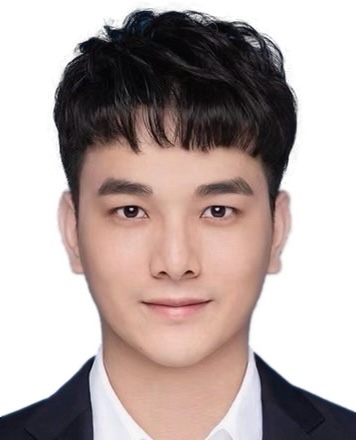
![]() | Prof. Wanyang DaiNanjing University, China Wanyang Dai is a Professor at the School of Mathematics, Nanjing University (PhD supervisor/key discipline post), Chief Scientist at Su Xia Control Technology, and Chairman & CEO of the American Quantum Computing Blockchain Industrial Revolution Forum (SIR Forum). He serves as a distinguished expert at Jiangsu Financial Technology Research Center, President of Jiangsu Statistical Society, Chair of Jiangsu Big Data Blockchain and Intelligent Information Committee, Vice President of several national societies in probability, statistics, operations research, and applied mathematics, and a member of the National Natural Science Award Committee for Mathematics (leader of the stochastic analysis group). He is also an expert reviewer for major National Natural Science Foundation projects, including outstanding youth programs. Professor Dai has held editorial roles for numerous international journals such as Elsevier’s Results in Applied Mathematics and Journal of Applied Mathematics and Physics, and has chaired various international conferences. He was a permanent scientist and researcher at AT&T (now Nokia) Bell Labs, leading key projects and assisting technical management, and served as Chief Scientist at Deepsea Digital Economy Institute. He earned his PhD in Mathematics, jointly awarded by Georgia Institute of Technology’s School of Mathematics and the School of Industrial and Systems Engineering (1992–1996). Professor Dai has made significant contributions to quantum computing and quantum cloud computing, stochastic (asymptotic) optimal control, stochastic (differential) game theory, and stochastic (ordinary/partial) differential equations including forward-backward and reflected types. His pioneering work, cited and developed by many renowned scientists including US Academy of Sciences and Engineering members and winners of the INFORMS Lancaster and John von Neumann prizes, was featured as a 45-minute invited lecture at the 1998 International Congress of Mathematicians in probability and statistics. His influential results have been published in leading international journals. |
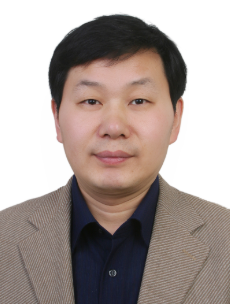
![]() | Prof. Zhiyuan LiSouth China University of Technology, China Zhiyuan Li, Professor and doctoral supervisor, was born in May 1972 in Zhangpu County, Fujian Province. He graduated from the Department of Physics at the University of Science and Technology of China in 1994 and obtained his Ph.D. from the Institute of Physics, Chinese Academy of Sciences (CAS) in 1999, receiving the “Director’s Special Award.” His doctoral dissertation won the 2001 National Top 100 Outstanding Doctoral Dissertation Award. From 1999 to 2003, he conducted research at the Hong Kong University of Science and Technology, the University of Washington (USA), and the Ames Laboratory of the U.S. Department of Energy. In January 2004, he was selected for the CAS “Hundred Talents Program” with outstanding support, receiving an excellent final evaluation in 2008. In 2005, he was awarded the National Science Fund for Distinguished Young Scholars, and in 2011, he received the “Wang Daheng Optical Award” from the Chinese Optical Society. Between 2014 and 2016, he served as a researcher and group leader of the L01 team at the Institute of Physics, CAS, and concurrently as a professor in the Department of Physics at the University of Science and Technology of China. Since October 2016, he has been a professor and doctoral supervisor at the School of Physics and Optoelectronics, South China University of Technology, and director of the Laboratory of Artificial Optical and Acoustic Microstructures. He is an associate editor of EPL and editorial board member of *Acta Optica Sinica*, *Chinese Science Bulletin*, and *Advanced Optical Materials*. He was named a Thomson Reuters Highly Cited Researcher globally in 2014 and an Elsevier Highly Cited Researcher in China in 2016. |
| Prof. Daowen QiuSun Yat-sen University, China Prof. Daowen Qiu’s main research contributions include quantum models of computation, quantum query algorithms, quantum cryptography and communication, quantum state distinguishability and cloning, quantum and lattice-valued logic-based computation theory, and applications of fuzzy and probabilistic automata in discrete event systems. He has published over 130 journal papers and 25 conference papers. Notably, Prof. Qiu systematically studied various quantum finite automata (QFA) models, resolving equivalence and minimization problems for QFAs, answering open questions posed by Professors Gudder, Gruska, Moore, and Crutchfield. He introduced the one-way quantum finite automata with classical states model and investigated properties of 2QFAC, quantum pushdown automata, and quantum Turing machines. His work in quantum query algorithms includes characterizing Boolean functions solvable by one-query quantum algorithms. Prof. Qiu also advanced understanding of quantum state discrimination, cloning, and probabilistic deleting machines, and contributed to semi-quantum cryptography by proving unconditional security of certain protocols. Furthermore, he established residuated lattice-valued automata theory and developed supervisory control frameworks for fuzzy and probabilistic discrete event systems. |
| Researcher Prof. Xiaoshuang ChenShanghai Institute of Technical Physics, Chinese Academy of Sciences Xiaoshuang Chen is a researcher and doctoral supervisor at the Shanghai Institute of Technical Physics, Chinese Academy of Sciences. He has served as the director of the State Key Laboratory of Infrared Physics and has been awarded the National Science Fund for Distinguished Young Scholars, the Chinese Academy of Sciences “Hundred Talents Program,” and recognized as a leading talent of Shanghai. He has long been dedicated to the research of infrared optoelectronic materials and devices, as well as artificial photonic microstructures, successfully addressing numerous complex problems in the field of semiconductor optoelectronic materials physics and devices. He has published over 160 papers in top international academic journals, including *Nature Materials*, *Nature Communications*, *Advanced Materials*, and *Physical Review Letters*, which have been cited more than 8,000 times according to SCI. He holds more than 40 authorized and pending invention patents. He serves as an editorial board member for several SCI journals, including *Scientific Reports*, and has undertaken multiple major projects under the National Key R&D Program, the National Natural Science Foundation's major and key projects, as well as significant projects funded by the Shanghai Science and Technology Committee. His scientific achievements have been recognized with multiple provincial and ministerial-level awards or above, including the Shanghai Natural Science Peony Award and the National Natural Science Second Prize. |